A Smarter Way to Start Spanish
For beginner students in middle school, learning a new language should be both interactive and exciting. For first-time Spanish learners, only grammar lessons and static vocabulary lists aren’t enough! This is where a well-designed interactive Spanish curriculum for middle school brings a difference by creating an immersive environment and fostering engagement from day one. While the student-centric structure keeps the young pupils motivated, teachers get to measure the language growth to elevate learning.
Through this blog, we will explore the details that matter the most in the Spanish language curriculum for beginner learners. Also, learn what makes Robotel’s SmartClass curriculum more effective and liked by modern schools.
Why Middle School Is the Perfect Time to Start Spanish
Middle schoolers who typically fall between grades 6-8 sit at a powerful developmental stage, especially for language acquisition. These formative years enable them to naturally grasp concepts of basic grammar. However, they need to work hard to master pronunciation. When the Spanish language is introduced at this age window, it ensures:
- A solid foundation for pursuing future language studies at the secondary level and even for career-related purposes.
- Enhanced cognitive development, including critical thinking, multitasking skills, memory retention, and improved overall academic performance.
- Greater global consciousness and cultural curiosity — empowering students to view the language as a tool to connect with ideas and people around the world.
However, the benefits are realized only when the Spanish curriculum for middle school is engaging, student-friendly, and accessible. If schools limit the Spanish language curriculum to just another rigid and text-heavy workbook chore, it can demotivate students!
Benefits of a Digital Spanish Curriculum for Middle School
An interactive Spanish language curriculum offers an array of advantages over traditional approaches—especially for middle school learners:
-
Learn Anytime, Anywhere
Any web-based curriculum empowers students to access their lessons on any device. They can access it over the phone, tablet, or laptop. This flexibility supports both in-class and remote or outdoor learning. With the ability to learn anytime and anywhere, students stay connected to revisit lessons and learn at their own pace.
2. Meaningful Speaking Practice
For effective Spanish learning, communication is more important than memorization. A strong curriculum, therefore, integrates speaking activities with AI-powered tools. These encourage students to build better dialogue and practise pronunciation.
3. Gamification and Engagement
Young learners from middle school levels connect easily with interactive and gamified content. With fun challenges, quizzes, audio-video exercises, and other interactive tasks, students learn actively and more quickly. This approach encourages participation, improves retention, and builds a positive and long-term association with the Spanish language.
Transforming the Classroom with SmartClass
Robotel’s SmartClass solution transforms language learning by combining a powerful digital platform with engaging content, offering students more opportunities to practice, speak, and master fluency. Here’s how it supports a successful Spanish curriculum for middle school:
Ready-To-Use Curriculum + Customization
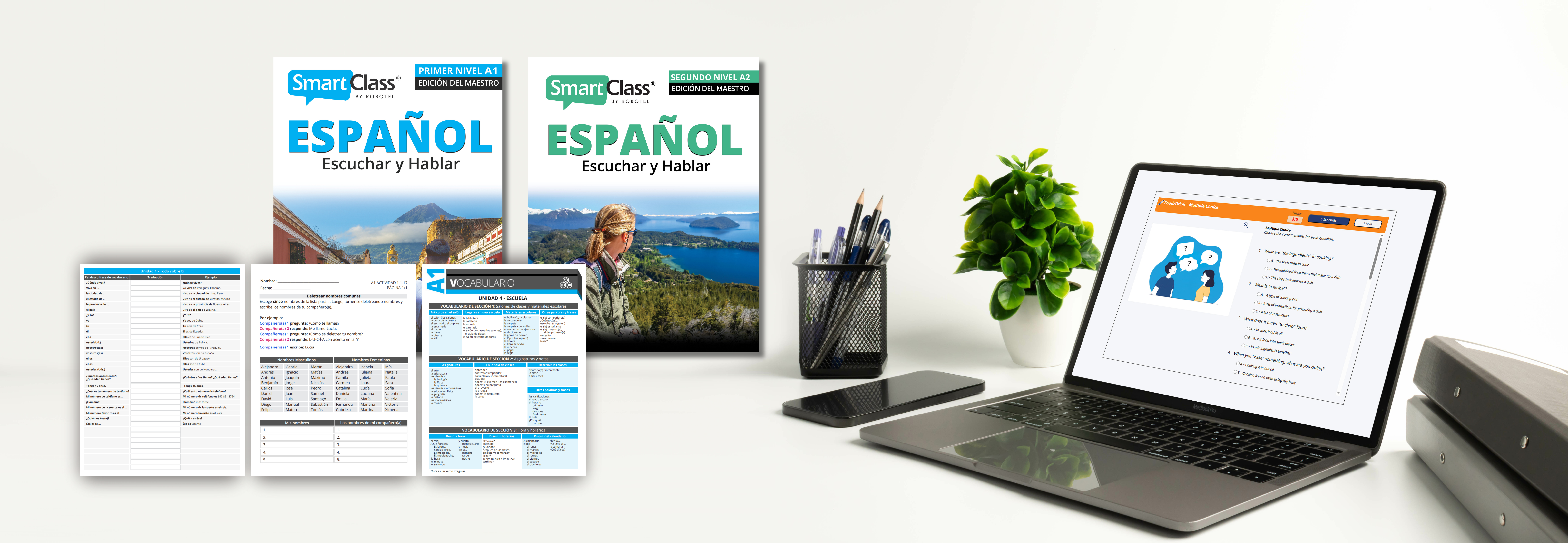
The Spanish curriculum includes over 850 pre-built activities focused on listening and speaking. This supplemental curriculum enhances classroom instruction, improves fluency, and ensures an engaging learning experience for students.
Diverse Task with a Balanced Focus on Communication Skills
The curriculum prioritizes conversation and listening practice that’s often overlooked in traditional foreign language programs. The authentic videos with over 20 different activity options make it suitable for early learners. Plus, the conversation feedback helps in building confidence quickly.
Flexibility
The SmartClass Spanish language curriculum can be downloaded in full or filtered to select specific activities to supplement the day-to-day learning.
Auto-graded activities
Several activities on the platform provide immediate feedback to students, reducing grading time for teachers.
Putting Students at the Center of Learning
Perhaps the most differentiating feature of an interactive Spanish curriculum for middle school is that students learn by actively participating rather than just merely memorising vocabulary and rules. Students aren’t limited to being passive listeners when:
✔ They practice guided exercises by speaking aloud, which not only improves pronunciation but also builds confidence.
✔ They relate and interact with real-world language scenarios to actually understand how Spanish is used in everyday communication.
✔ They take pride and autonomy in learning and tracking their own progress.
✔ They receive instant feedback, which helps them correct errors instantly and simultaneously increases motivation.
These practical and meaningful features equip learners with a strong hold in the language instead of only engaging them in listening or completing worksheets, which is the ultimate goal of any Spanish language curriculum.
Inspire a New Generation of Spanish Speakers
The Spanish curriculum for middle school cannot be limited to rote memorization but must balance structure with interactive engagement and fun. When young learners are introduced to the Spanish language through meaningful speaking practice, interactive lessons, and constant reviews and feedback, it nurtures them with curiosity and confidence. This strong foundation helps them transition effortlessly into the secondary-level Spanish language curriculum and prepare for both academic and career-related opportunities for the future.
By adopting a modern, tech-enabled, and thoughtful curriculum, schools can transform the learning practice. If you want to provide an immersive experience to young learners, explore the interactive Spanish language curriculum with Robotel’s Smartclass.



.svg)

Leave a comment