

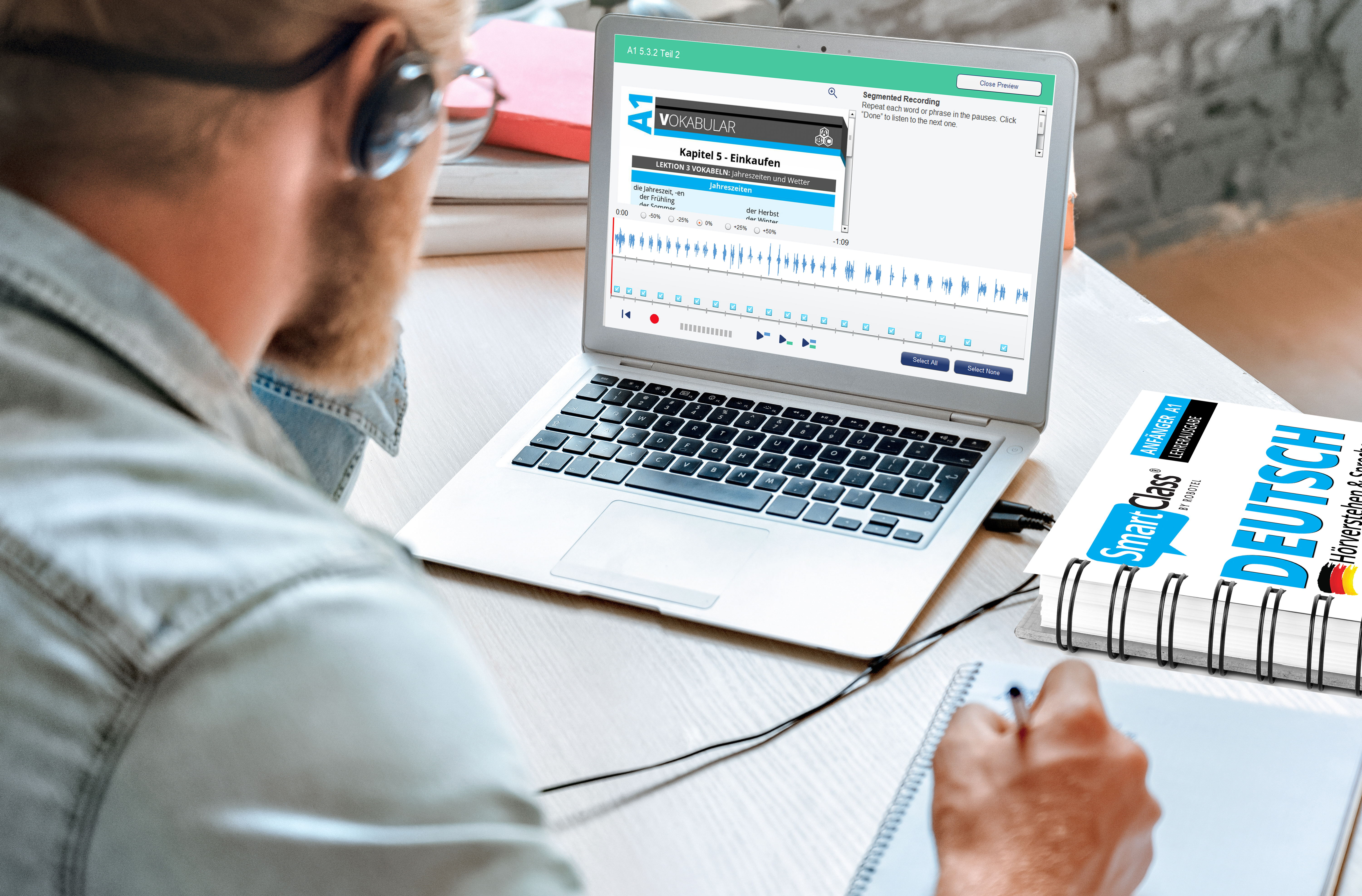
To make learning German a rewarding experience, it needs to be more than just memorizing. It needs to unlock new cultures, dive into history, and grab hold of future career opportunities for students to take ownership and find value in learning. For educators, the challenge is how to provide manageable, engaging steps to proficiency and increased student confidence. A truly effective German lesson plan doesn't just drill grammar but builds a bridge to actual fluency.
By centering your instruction on the four pillars (Speaking, Listening, Reading, and Writing) you create a balanced learning experience. Here’s a look at how to level up your instruction using the SmartClass German language curriculum and interactive tools within the SmartClass Teaching Platform.
1. Speaking: Overcoming the "Silence Barrier"
Ask any language learner, and they will tell you that speaking is the scariest part of the process. The fear of making mistakes in front of others leads students to not take an active role during class. German lesson plans focused on speaking need to move beyond rote repetition and encourage meaningful participation.
- The Strategy: Lean into "Situational Survival" scenarios. Think: navigating a busy U-Bahn station or trying to order a Brötchen at a local Bäckerei.
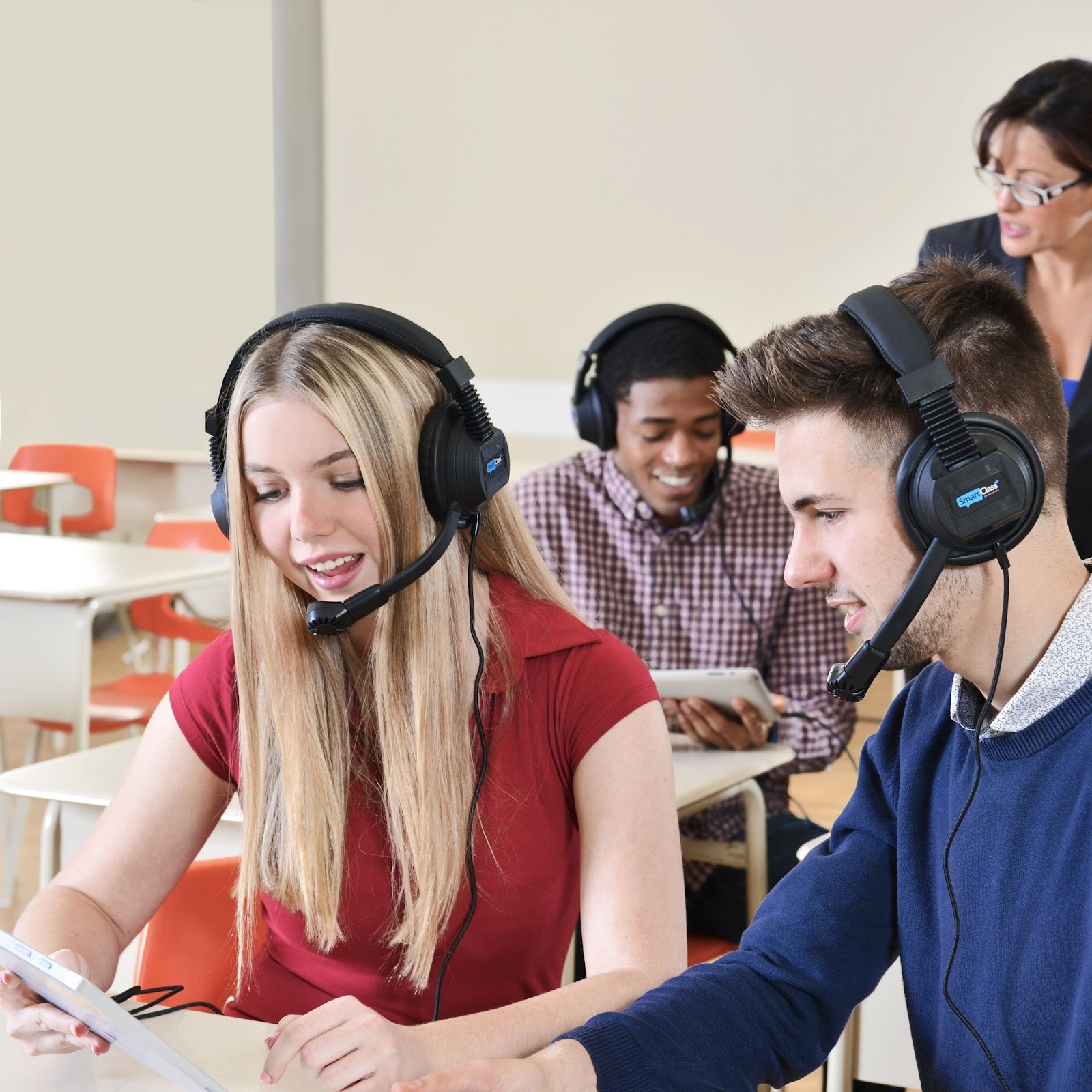
- The SmartClass Edge: Use the Pairing/Grouping tool in the Language Lab. It lets students record conversations with a partner in a private digital space. It’s a total game-changer for "stage fright"—they can practice without the whole class watching, while you get the audio files later to provide tailored feedback on their pronunciation.
2. Listening: Finding the German Rhythm
German has a unique "melody" and a handful of tricky dialects. If your lesson plans only feature the slow, robotic audio from old textbooks, your students are going to be lost in the real world.
- The Strategy: Bring in the real world. Use "Authentic Input"—think weather reports, German TikTok trends, or snippets from popular podcasts.
- The SmartClass Edge: Assign "Listen and Redo" tasks. Students hear correct pronunciation, record themselves mimicking the specific tone and inflection, and can instantly self-correct. It’s about training the ear and the tongue at the same time.
3. Reading: Building the Mental Library
Reading is where the "logic” of German can more easily come to light. It’s the best way for students to see sentence structure in action. When designing German lesson plans, focus on building confidence through recognition.
- The Strategy: Start with "Cognate Hunting." Have students hunt for "true friends" (like Hand, Haus, and Garten). It proves to them that they actually know more German than they realized.
- The SmartClass Edge: You can upload authentic PDFs—like a real restaurant menu or a news clipping—directly to the platform. You can then attach Hotspot activities to ensure students are actually comprehending the nuances of the text rather than just skimming.
4. Writing: Precision and Structure
Writing offers that "slow-motion" time students need to wrap their heads around verb placement and those infamous case endings. The best German lesson plans move from "training wheels" to creative freedom.
- The Strategy: Use a "scaffolded" approach. Start with an easier Fill-in-the-Blanks activity, move to Sentence Jumbles to review structure and fluency, and eventually introduce free-form journaling.
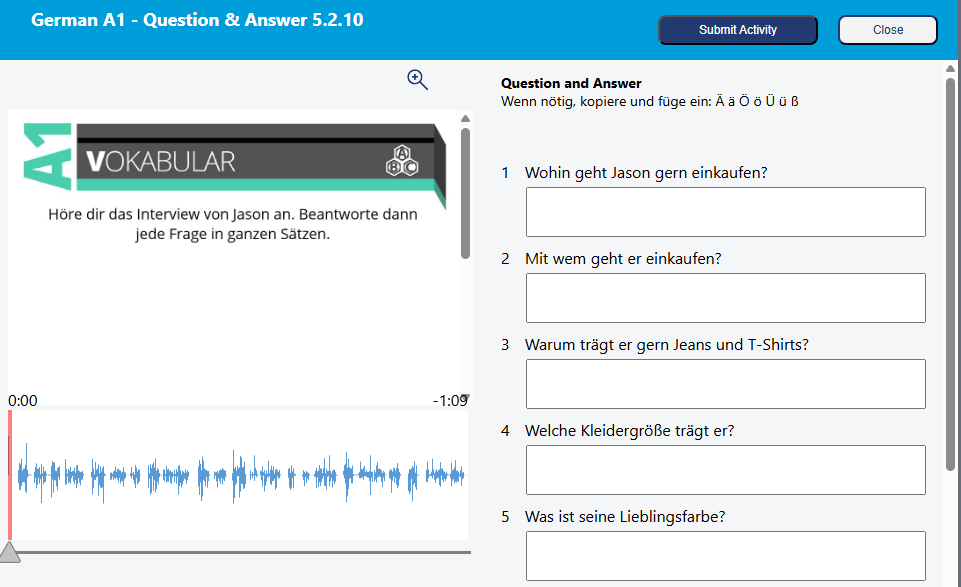
- The SmartClass Edge: Utilize the platform’s writing activity options: Question & Answer activities allow students to practice the "Question Answer Relationship" (QAR) guideline, ensuring they respond in complete and correct sentences. "Open Text" templates could be used for digital journaling.
Adding the "Extra Layer": Cultural Context
Great German lesson plans also teach Kultur. You cannot separate the language from the people. When teaching the German language curriculum, weave in "Cultural Tidbits." When teaching "Daily Routines," teachers could discuss the German concept of Feierabend (the end of the work day) or the importance of Pünktlichkeit (punctuality). This helps students understand the "why" behind the "what," making the vocabulary more meaningful and memorable.
Here is one example of how a 45-minute German lesson can be organized using SmartClass tools to support the areas of vocabulary, grammar, pronunciation, and culture in one complete class period.
45-Minute Lesson Plan – "My Daily Routine"
Key Goal: Mastery of daily verbs and the 24-hour clock using German lesson plans powered by SmartClass.
I. Intro & The "Hook" (7 Minutes)
- The "Hook": Start with a "Mime Game." The teacher mimes waking up, drinking coffee, or brushing teeth. Students shout out the German verb if they know it, or the English word if they don't.
- The Connection: Briefly explain that Germans often use the 24-hour clock (military time). Show the Lerntipp from SmartClass German AI Chapter 4 Section 3. This adds a quick cultural challenge to the lesson.
II. The "Teaching" Portion (13 Minutes)
- Direct Instruction: Write the "Power Verbs" on the board: aufstehen (to get up), frühstücken (to eat breakfast), arbeiten (to work), and schlafen (to sleep).
- Grammar Spotlight: Explain "Separable Verbs" (Trennbare Verben). Show how aufstehen becomes "Ich stehe... auf." This is a "lightbulb" moment for many students.
- Visuals: Use a projector to show a visual timeline of a typical student’s day in Germany to compare it to their own. Look at the student schedule from activity German A1 4.3.16 to talk about what is happening when.
III. Active Practice (15 Minutes)
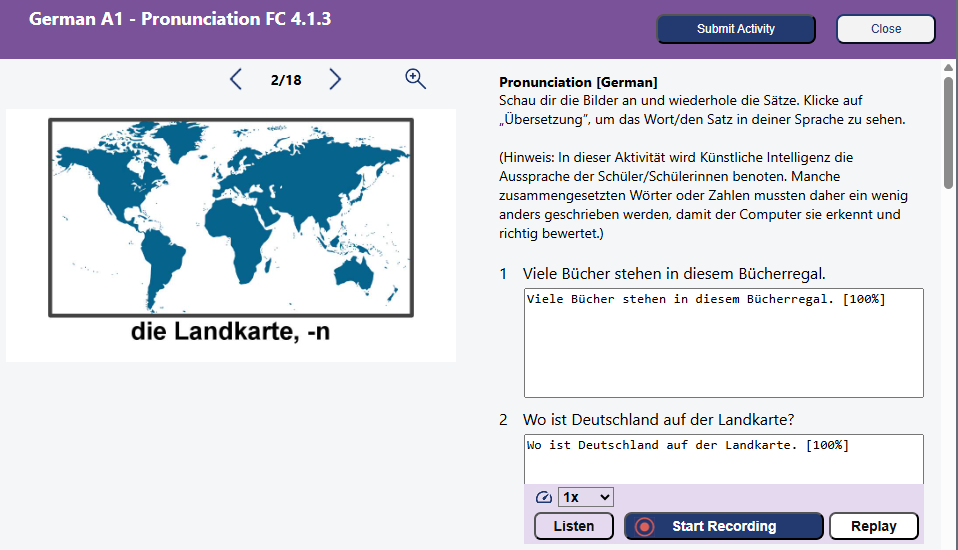
- Step 1 (Individual): Assign a SmartClass Pronunciation activity to practice common phrases about morning routines.
- Step 2 (Group): "Speed Dating." They have 60 seconds to tell a partner their routine. When the timer rings, they switch partners. This forces them to use the same vocabulary repeatedly until it becomes "muscle memory," essential for great German lesson plans.
IV. Reflection & Whole Group (5 Minutes)
- Check for Understanding: The teacher asks: "Who wakes up earliest?" (Wer steht am frühsten auf?) Students compare times.
- Feedback: Address the most common mistake heard during the speed-dating (usually verb placement).
V. Exit Game & Homework (5 Minutes)
- Exit Game: "The Chain." One student says "Ich stehe auf," the next adds "Ich stehe auf und ich frühstücke." See how long the class can keep the chain going.
- Homework: Assign a "Daily Routine" Open Recording activity in the SmartClass Teaching Platform, in which students must record a 30-second audio clip describing their ideal Saturday routine to be reviewed before the next class.
By centering your German lesson plans around interactive tech and authentic culture, you turn a challenging language into an accessible, living skill.
If you're looking to update your current German language curriculum to include measurable growth in all four areas of language acquisition, check out ways Robotel's SmartClass Teaching Platform can help you meet your classroom goals.
Connect with one of our product experts!

Related Blog
.svg)

Our usage report is a valuable tool for monitoring progress and setting learning goals. It provides...
Whether you are leading a world language department, working with your colleagues on creating the...

Leave a comment